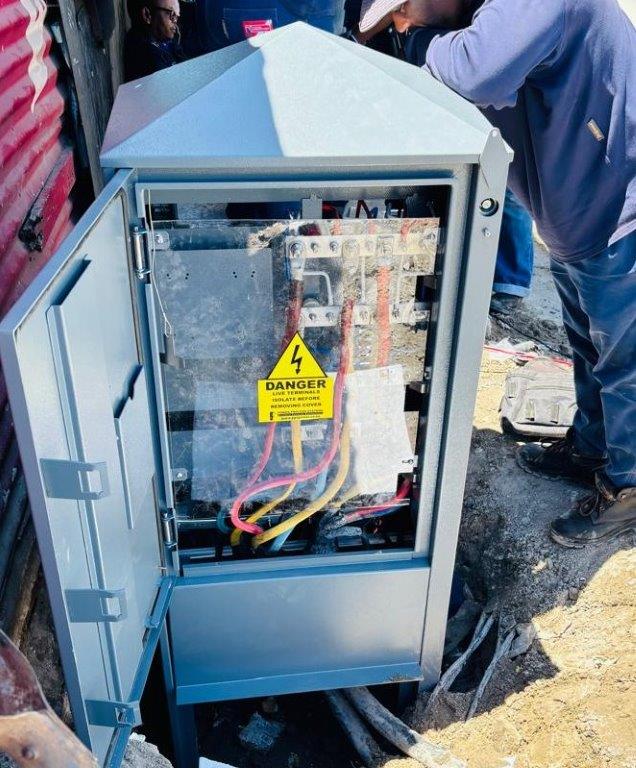

4 May 2026: Infrastructure vandalism in South Africa has evolved into a widespread and systemic issue, affecting power distribution, street lighting, and telecommunications networks nationwide. According to Power Process Systems (PPS), the scale and frequency of incidents continue to rise, placing increasing pressure on municipalities, utilities, and private sector operators to rethink how infrastructure is designed, deployed, and maintained.
“Infrastructure is targeted mainly for copper and cable theft and ease of access. If something can be opened quickly, removed easily, or stripped for value, it becomes a target. A lot of older infrastructure was not designed with today’s risks in mind, which makes it even more exposed,” explains Julius Viljoen, Sales Manager at PPS Cape Town Branch.
While the Western Cape remains comparatively well-managed, it is not immune. The region has demonstrated strong operational responsiveness, but the strategic focus is now shifting toward preventative measures that prioritise long-term resilience over reactive repairs.
Changing client priorities on the ground
“As the threat landscape evolves, infrastructure can no longer be designed purely for function but must be designed for resilience,” says Viljoen. “On the ground, we are seeing a clear shift in client priorities. It is no longer just about supplying infrastructure but securing it to actively deter tampering and theft.”
The company’s presence in Cape Town has provided valuable insight into how client needs are evolving. There is a growing emphasis on securing infrastructure assets through anti-vandal enclosures, tamper-resistant designs, and enhanced monitoring capabilities.
Beyond physical protection, there is also increasing pressure to minimise downtime. “When infrastructure is hit, it needs to be restored quickly, so resilience and ease of maintenance are becoming just as important as the initial installation,” says Viljoen. This points to making ease of maintenance and system accessibility key considerations alongside durability and security.
Engineering resilience into infrastructure design
Certain types of infrastructure remain particularly vulnerable, including streetlight kiosks, distribution boards, and low-voltage reticulation systems. These assets are often targeted for copper and cable theft, especially where access is quick and components can be easily removed or resold.
In response, PPS is placing greater emphasis on design-led resilience. “From a design perspective, we now need to factor the vandalism element into the functional consideration,” says Viljoen. Key considerations are o exposed fasteners or easy access points, use of alternative materials where possible, reinforced enclosures and locking mechanisms, and designs that simply delay access.
“Even a few extra minutes can be a deterrent. It is about designing and manufacturing the product in such a manner that makes it more difficult to gain entry to, and utilising parts and fittings that offer the same quality and strength but little resale value,” says Viljoen.
Smart monitoring and proactive maintenance
Technology is increasingly central to the company’s approach. Solutions now incorporate features such as door sensors, power monitoring, and real-time alerts, enabling early detection of unauthorised access or system faults. This allows for faster response times, reduced downtime, and improved accountability.
Equally important is proactive maintenance. Regular inspections help identify vulnerabilities before they are exploited, shifting the focus from costly reactive repairs to preventative intervention. “Proactive maintenance is no longer optional but essential,” comments Viljoen. “In today’s environment, waiting for failure is simply too expensive.”
Integration and future-focused infrastructure
Modern infrastructure systems must operate as part of a connected ecosystem. PPS’s solutions are designed to integrate seamlessly with municipal SCADA systems, third-party monitoring platforms, and broader security networks, ensuring full visibility and control.
Looking ahead, the company sees significant growth opportunities in retrofitting existing infrastructure, deploying modular and standardised systems, and combining physical security with smart technologies.
“What sets PPS apart is that we do not just supply products but design solutions based on real-world conditions. We understand local risks, installation challenges, and maintenance realities. Our approach is practical in that we focus on what actually works on the ground, not just what looks good on paper,” concludes Viljoen.