


South Africa’s mining industry is confronting an intensifying illegal mining crisis that is being fuelled, government officials warn, by prolonged delays in licensing and a faltering exploration pipeline, underscoring weaknesses in governance and investment confidence.
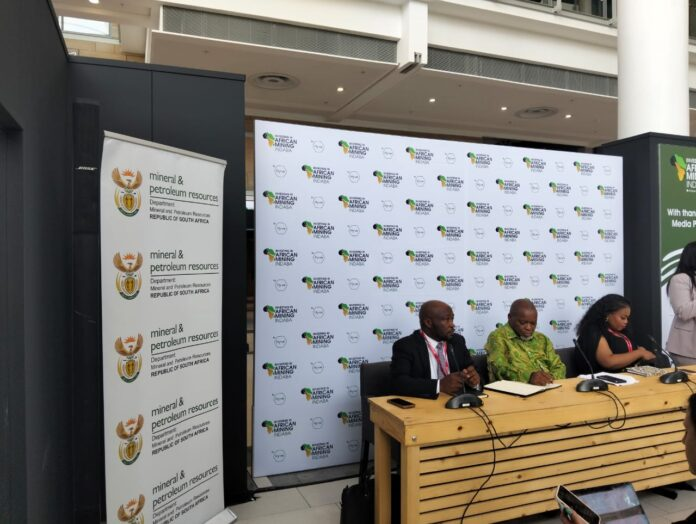
Speaking on the opening day of the Investing in African Mining Indaba in Cape Town on February 9, Mineral and Petroleum Resources Minister Gwede Mantashe said slow progress in building a reliable cadastre system for mining rights and exploration permits is inadvertently driving more unregulated mining activity.
“Without a functioning pipeline of new exploration and an efficient licensing process, unregulated mining will continue to expand,” Mantashe said, stressing that failure to ramp up formal development risks fuelling further illegal operations.
Illegal miners, commonly referred to as zama-zamas, are now entrenched in thousands of abandoned shafts across the country, with industry estimates suggesting around 30 000 illegal miners are responsible for roughly 10 % of South Africa’s gold output from some 6 000 old workings.
Analysts and industry figures say the illicit sector has become a major socio-economic challenge, entangled with organised crime and exploiting vulnerable labour.
Independent reports have previously noted that smuggling and theft linked to illegal mining could cost the formal industry far more than official estimates — potentially well above the roughly R60 billion lost annually cited by authorities.
Junior mining in decline
Mantashe acknowledged some positive movement in formal permitting over the past year, with 358 prospecting rights and 32 mining rights issued and the government’s Junior Mining Exploration Fund growing to around R2 billion from an initial seed of R400 million.
However, he said the overall environment remains challenging, with South Africa’s share of global
exploration investment plunging from about 5 % two decades ago to less than 1 today — a sign of weakened investor confidence.
At the heart of the problem is the sluggish rollout of a digital cadastre — an online system intended to speed up rights applications and improve transparency. Mantashe conceded that progress has been slow and hampered by poor data quality, with only limited piloting underway several years after initial commitments.
Law firm experts at Herbert Smith Freehills have emphasised the cadastre’s delayed implementation as a major constraint, noting that transparent, efficient data systems would be critical to rebuilding trust in the sector.
A broader economic and strategic warning
Beyond immediate regulatory concerns, Mantashe used his address to highlight broader geopolitical competition over Africa’s mineral wealth, urging African nations to assert stronger control over their resources rather than ceding advantage to foreign powers — a dynamic he said has historically undermined development on the continent.
He argued that a united, transparent approach among African countries could strengthen negotiating power with global investors and foster value-added industrialisation closer to the source of mineral wealth.