
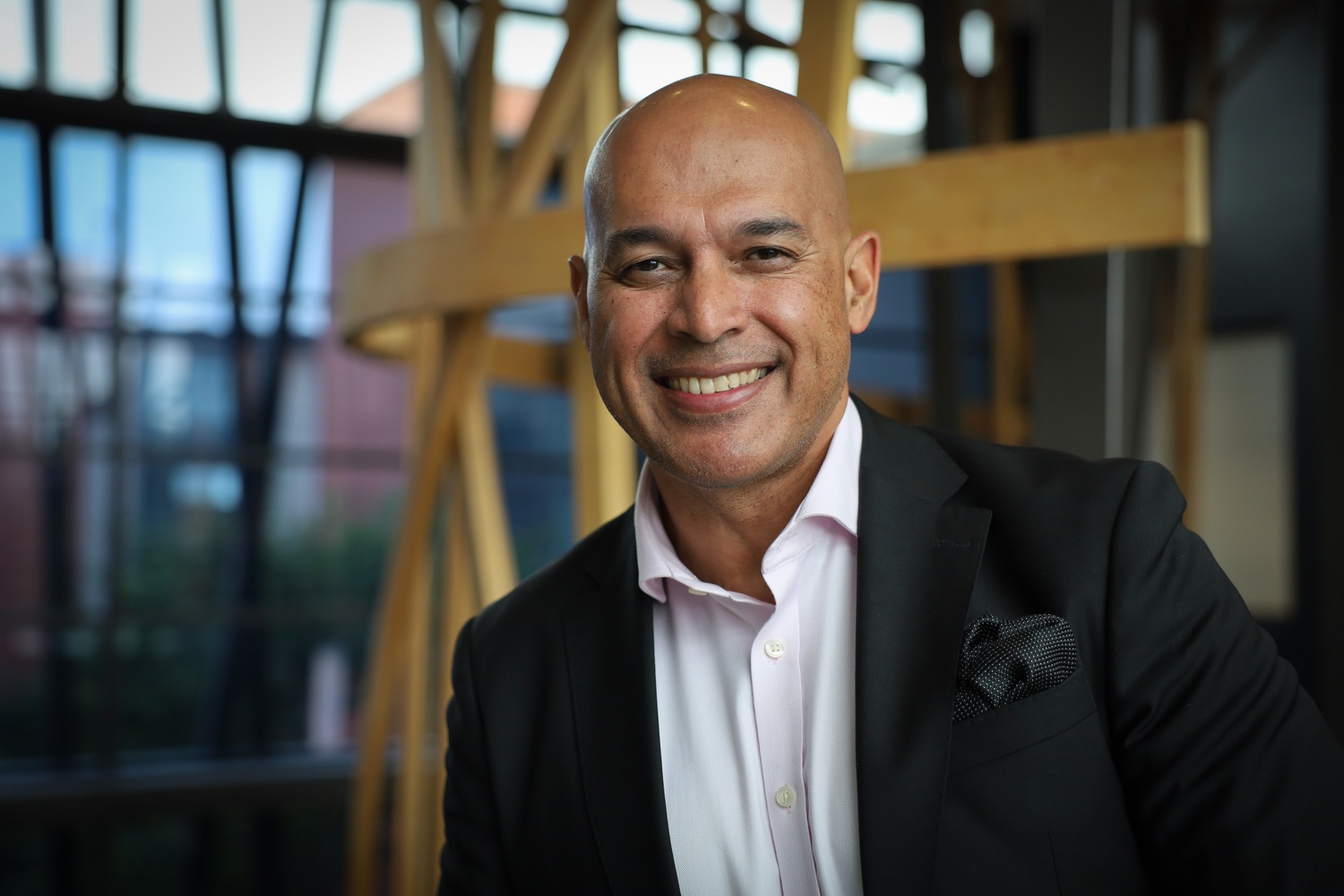
Redefining what cross-regional engineering collaboration looks like is the main focus of Denver Dreyer, Chief Executive Officer: Middle East and North Africa (MENA) at Zutari, who is positioning the firm at the intersection of African capability and Gulf capital.
Appointed to the role in April 2025, Denver brings more than three decades of experience across engineering, consulting and industrial sectors, with leadership roles spanning Honeywell and Worley. However, his focus today is firmly on the future and on the powerful synergies emerging between Africa and the Gulf Cooperation Council (GCC) region.
A bridge between regions
For Denver, Zutari’s role in MENA is not simply about expanding geographically, it is about connecting two regions in a way that delivers tangible impact. “There are two very strong links between Africa and the Middle East,” he explains.
“On the one hand, we can access a vast quantity and quality of engineers from Africa and bring their skills and technical expertise into the MENA market. On the other, there’s significant capital flowing from the Middle East into Africa into ports, logistics, energy and agriculture.”
This dual dynamic positions Zutari as a critical intermediary. “We engage with sovereign wealth funds in the Middle East as a trusted partner who understands the region,” says Denver. “But we also engage with them as a fiercely local partner in countries like Malawi, Mozambique or Botswana where that capital is actually deployed.”
A legacy in the Middle East
While Zutari’s current momentum in the Middle East is accelerating, its roots in the region run deep. “We have had an official presence in Dubai for 25 years through our legacy companies,” says Denver. “However, South African engineers have been involved in the region for far longer, in some cases going back to the late 1970s.”
Denver points out that South African contractors and engineers played a foundational role in shaping modern Dubai, a contribution that is often overlooked. “That pedigree matters because we understand the culture and historical heritage of the GCC,” he adds. “It gives us a depth of experience that we can draw on when delivering complex infrastructure today.”
From mega-projects to meaningful infrastructure
The Middle East has long been associated with record-breaking mega-projects. However, Denver notes a clear shift in priorities. “In the past, it was about the tallest building, the fastest train or the biggest project,” he says. “Now, there is a much stronger focus on what is economically and financially viable and sustainable.”
This recalibration, he explains, is creating a more sustainable and realistic environment for engineering firms. “We are now dealing with clients who are looking at projects more pragmatically, which is a positive development.”
At the same time, the region remains one of the most dynamic engineering environments in the world. “This is still a place where you are pushing the boundaries,” Denver adds. “But it is increasingly balanced by long-term thinking and viability.”
Engineering excellence in a global arena
The Middle East is also one of the most competitive engineering markets globally, with leading consultancies from across the world vying for projects. Zutari’s response, according to Denver, is deliberate and focused.
“We are not a Tier 1 mega-consultancy,” he says. “We are a bespoke, high-quality engineering and built environment firm. We choose our battles carefully and operate in areas where we know we can offer superior value.”
This includes transport infrastructure, water systems, the built environment, energy and master planning, all underpinned by nearly a century of accumulated legacy expertise. “We aim to offer the best value for money, backed by a name that clients can trust.”
Digitalisation as a baseline, not a differentiator
In a region known for its technological ambition, digital capability is no longer optional. “In the GCC, digital tools are a given,” notes Denver. “They are not a differentiator, but the mandate to ensure we are on top the of game.”
What sets organisations apart, he argues, is not the tools themselves, but how they are used. “The real value lies in people who understand when and how to apply technology. Those are the scarce skills, the digital realists who can bridge the gap between optimism and practicality.”
Smart cities and the future of infrastructure
Zutari is actively involved in shaping the next generation of urban infrastructure in the region, including Dubai’s 2040 Transport Master Plan. “We are modelling how people will move around the city, whether that is autonomous vehicles, rail, waterways, or even aerial mobility,” Denver explains.
This work is closely tied to the development of smart cities, where digital twins and real-time data play a central role. “In the future, buildings will actively communicate with emergency responders,” he says. “A firefighter responding to an incident could know exactly where the fire is, where vulnerable occupants are located, and what hazards exist before even arriving on-site.”
Resilience: from climate to conflict
Recent events have also reshaped how infrastructure is designed in the region. “Two years ago, we saw major flooding in the UAE in a desert environment,” highlights Denver. “That highlighted the need for climate resilience.”
At the same time, geopolitical tensions are driving a second form of resilience. “We are now looking at how to harden infrastructure, building redundancy into power systems, designing buildings that can withstand shocks, and improving emergency response through digital integration.”
Learning for Africa
For Denver, one of the most exciting aspects of this work is its applicability to Africa. “The Middle East is effectively a test bed for new technologies,” he says. “And Africa does not need to reinvent the wheel. We can adopt and adapt what has already been proven.”
This is where Zutari’s cross-regional model becomes particularly powerful. “We can take lessons from the Middle East and apply them in African contexts, whether that is in transport, energy or smart city development and vice versa.”
Engineering with purpose
Beyond the technical and commercial aspects, Denver is passionate about the broader impact of engineering. “You do not just build a bridge,” he says. “You connect communities. You enable trade. You improve access to education. You restore dignity.” He believes engineering plays a fundamental role in shaping societies.
“In many ways, engineering has had a greater impact on the quality and length of human life than any other profession, through clean water, infrastructure and connectivity.”
A bullish outlook
Looking ahead, Denver remains optimistic about both the Middle East and Africa. “The Middle East is home to some of the world’s largest sovereign wealth funds,” he says. “Even in challenging times, these countries have the ability to invest and build.”
He also sees Africa as a central part of that future. “The Middle East recognises Africa as a key growth market,” he notes. “There is a real opportunity to unlock value through infrastructure, and that is where partnerships become critical.”
Despite short-term geopolitical uncertainties, his outlook is clear. “I am very bullish,” asserts Denver. “This region has the resources, the ambition and the capability to continue building and to play a positive role in Africa’s development.”
The role of partnership
Ultimately, Denver emphasises that success in this environment depends on collaboration. “You cannot deliver projects of this scale alone,” he says. “Partnerships allow you to co-create, co-innovate, and bring together the best capabilities.”
For Zutari, that means acting not only as an engineering firm, but as a trusted partner across regions. “We become ambassadors,” he concludes. “We represent African capability in the Middle East, while delivering consistent quality on the ground in Africa. That’s where the real value lies.”