
US mining company KoBold Metals is using artificial intelligence to search for lithium in the Democratic Republic of Congo (DRC), seeking to gain an advantage in a sector where Chinese companies have established a dominant presence.
The California-based company has deployed geologists equipped with high-precision GPS devices and tablets linked in real time to an AI system running on servers thousands of kilometres away in the United States.
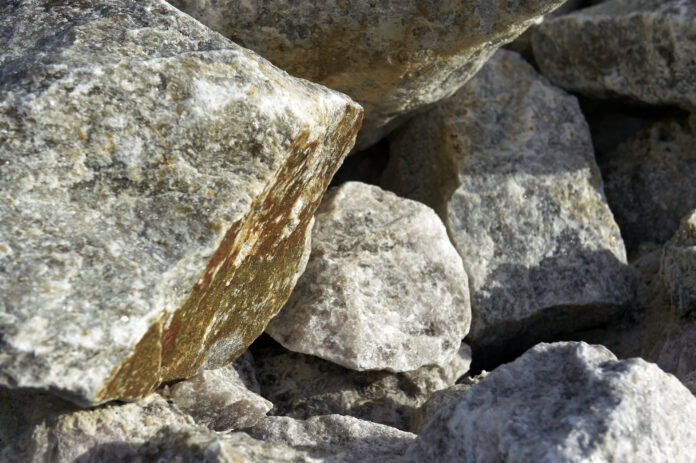
The technology combines new soil samples with historical geological maps, old drilling records and satellite imagery to identify areas that may contain lithium-bearing pegmatite.
Founded in 2018 with backing from investors including Bill Gates and Jeff Bezos, KoBold is part of a broader US effort to secure supplies of critical minerals and reduce dependence on China.
China controls an estimated 70 to 80 percent of the DRC’s copper and cobalt market, while the country remains largely unexplored despite its vast mineral potential.
KoBold has obtained 14 exploration permits covering more than 3,000 square kilometres since 2025. It plans to invest more than $50 million in the DRC by early 2027 and is currently collecting about 2,000 soil samples a week.
The company’s DRC managing director, Benjamin Katabuka, said the exploration had produced promising indications.
“We have very encouraging results,” he said, without providing details.
The company remains at the exploration stage and hopes to begin production within a few years. Its focus on lithium comes as global demand for the battery mineral is projected to more than double by 2030, according to International Energy Agency projections.
KoBold’s laboratory manager, Kevin Tambwe, explained how the technology is being used to guide exploration.
“Once we’ve determined the presence of lithium at very specific points, that allows us to target the drilling,” he said.
The company is operating from Manono, in southeastern DRC, an area that has attracted major mining companies. Chinese miner Zijin has a large operation next to KoBold’s exploration permits and shipped its first concentrate in June.
KoBold’s entry follows a strategic partnership between Washington and Kinshasa signed in December, but Katabuka said US investment had yet to arrive on the scale expected.
“Almost a year since the agreement was signed, but American investment hasn’t poured in,” he said.
Mining and diplomatic sources cited by AFP said discussions were expected on how to attract more US investment into a sector facing allegations of corruption as well as financial and environmental controversies.
For residents of Manono, however, the mineral boom is being viewed through the experience of generations of mining. Vicar general Wilson Katende said he hoped greater competition would improve conditions.
“Right now, you don’t feel like people here have been fairly paid,” he said, referring to miners who often earn less than $200 a month.
Territory administrator Cyprien Kitanga highlighted the town’s continuing lack of basic infrastructure.
“Manono lacks drinking water. Manono is not electrified,” he said recalling that mining companies previously “came, took the ore, and left holes behind for the children of Manono”.
Some workers nevertheless see the arrival of KoBold as an opportunity. One miner, who declined to give his name, said: “We want to go and work for the Americans.”
The contrasting expectations underscore the challenge facing KoBold as it seeks to turn AI-assisted exploration into a commercial mining operation while operating in a community where mineral wealth has historically coexisted with poverty and environmental concerns.