
Protecting what matters today, while building for a more sustainable and resilient tomorrow
Sustainability has become an increasingly important consideration in the design, construction and operation of buildings. From energy efficiency and water conservation to material selection and carbon reduction, developers and building owners are under growing pressure to reduce the environmental impact of the built environment.
However, sustainability cannot come at the expense of safety. When it comes to fire protection, the challenge is to find solutions that protect people, property and critical infrastructure while also reducing the environmental impact of fire protection systems themselves.
For Michael van Niekerk, CEO of ASP Fire, this requires a more holistic approach to fire protection. “Fire protection has a non-negotiable objective to protect life and property. However, that does not mean environmental considerations have to sit outside the fire strategy. The industry needs to look at how systems are designed, what suppression agents are used, how much water or other resources they consume, and what happens to those materials over the operational life of the system.”
Safety remains the starting point
In South Africa, fire protection is already embedded within the regulatory framework governing the built environment. The National Building Regulations require buildings to be designed, constructed and equipped to protect occupants, facilitate safe evacuation, limit the spread and intensity of fire, control smoke and provide suitable means for detecting, fighting and extinguishing fires. Compliance with the functional requirements of Part T can be achieved through the relevant provisions of SANS 10400-T.
The latest edition, SANS 10400-T:2024, reinforces the importance of competent design for automatic sprinkler systems, fixed firefighting systems, smoke-control systems and fire detection and alarm systems. It also provides for fixed automatic firefighting systems in certain taller buildings and larger basement areas, with systems designed in accordance with applicable standards including SANS 10287 and SANS 14520.
This regulatory foundation is important because sustainability cannot be used as a justification for selecting a lower-performing fire protection solution. Instead, the question is how to achieve the required level of protection with the lowest practical environmental impact.
Choosing the right suppression solution
One of the most obvious areas where environmental considerations arise is the choice of suppression agent. Water remains an extremely effective and widely used fire suppression medium, particularly in sprinkler systems. However, South Africa’s water constraints make resource efficiency an increasingly important consideration. System design therefore needs to consider not simply whether sufficient water is available, but whether the system is appropriately designed for the risk, minimising unnecessary discharge and water consumption while maintaining the required level of protection.
Other applications require different approaches. Data centres, electrical rooms, archives and other sensitive environments may require gaseous or clean-agent suppression systems where water could cause significant secondary damage. South Africa’s SANS 14520 series provides requirements for gaseous fire-extinguishing systems and covers a range of extinguishants, including inert gases and chemical agents.
Here, environmental performance becomes more complicated. A suppression agent needs to be evaluated not only according to its ability to extinguish a fire, but also in terms of factors such as global warming potential, atmospheric impact, toxicity, containment, disposal and the system’s overall lifecycle.
Foam is another area where the industry is undergoing significant change. Internationally, concerns about persistent PFAS chemicals are accelerating the move towards fluorine-free firefighting foams. This transition needs to be managed carefully because replacing an agent is not simply a matter of substituting one product for another. Compatibility with existing equipment, system design, fire performance and the specific hazard all need to be considered. The South African fire-protection sector is already engaging with this transition.
“The most environmentally responsible solution is not necessarily the one with the greenest label,” says van Niekerk. “It is the solution that provides the required fire performance while considering the full lifecycle of the system. That means looking at the hazard, the suppression technology, the environmental characteristics of the agent, maintenance requirements and what happens when the system operates.”
Sustainability starts with system design
The sustainability conversation also extends beyond the suppression medium itself. A well-designed fire protection system can contribute to a building’s overall efficiency by reducing unnecessary equipment, optimising water storage and pumping requirements, integrating detection and suppression systems and ensuring that equipment operates only when required.
Maintenance is equally important. Poorly maintained systems can become inefficient, unreliable or prone to premature replacement. Extending the operational life of fire protection equipment through appropriate inspection, testing and maintenance can reduce material consumption and waste while ensuring that the system remains capable of performing when it is needed.
This aligns with the broader direction of South Africa’s building regulations. SANS 10400-X addresses environmental sustainability, while SANS 10400-XA establishes energy-use requirements for applicable buildings. The regulatory framework therefore increasingly recognises that building performance cannot be separated from environmental considerations.
Where Green Star fits in
Green building rating systems provide another layer to this discussion. The Green Building Council South Africa’s Green Star system takes a holistic approach to building sustainability, assessing areas including energy, water, materials, emissions, indoor environmental quality, management and innovation.
Green Star is not a replacement for statutory fire regulations, nor does sustainability certification remove the obligation to comply with applicable fire standards. Rather, it provides a framework for pushing building performance beyond minimum regulatory requirements. The evolution of Green Star is particularly relevant to fire protection because the concept of sustainability is expanding beyond simply reducing energy and resource consumption.
The Green Star New Build V2 approach includes resilience and specifically considers climate-change impacts and risk mapping as part of future-ready building design. This creates an opportunity for fire engineers to become part of the sustainability conversation much earlier in the design process.
Designing for a changing climate
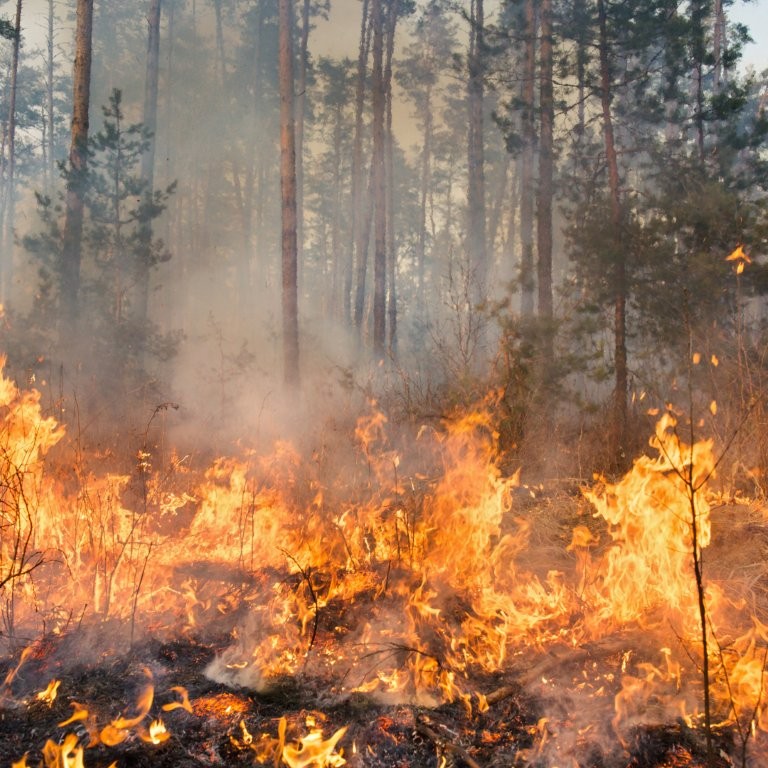
Climate change adds another dimension to the issue. South Africa is already experiencing increased pressure from extreme weather events, drought, heat and severe storms, while wildfire risk is a significant concern in various regions. The effects on buildings are not limited to direct fire exposure. Extreme weather can affect access, power supplies, water availability, communications, evacuation routes and the ability of emergency services to respond.
The result is that resilience is increasingly becoming part of the definition of a sustainable building. A building that consumes little energy but cannot maintain critical safety systems during an extreme event is not necessarily a resilient building.
“The next generation of fire protection needs to look beyond the fire scenario itself,” highlights van Niekerk. “We need to consider what happens when a fire occurs during a heatwave, a severe storm, a power interruption or another disruptive event. Futureproofing means designing systems that remain reliable under the conditions in which they may be required.”
This does not mean that every South African building needs to be redesigned around worst-case climate scenarios. It does mean that risk, location and future operating conditions should increasingly form part of the design conversation.
A balance between protection and responsibility
Ultimately, sustainability and fire protection are not opposing objectives. Both are concerned with protecting the long-term value of buildings, infrastructure, businesses and communities. The challenge for the industry is to move from viewing fire protection as a compliance requirement towards treating it as an integrated component of building performance.
That means selecting suppression technologies according to the hazard, considering environmental impacts alongside fire performance, designing systems efficiently, maintaining them throughout their operational life and anticipating the conditions in which they may have to perform.
For South Africa, where water scarcity, energy constraints, environmental responsibility and climate resilience are increasingly part of the built-environment conversation, this integrated approach will become increasingly important.
“Fire safety and sustainability should ultimately have the same goal: protecting people and assets while making responsible use of the resources available to us,” concludes van Niekerk. “The industry has an opportunity to design fire protection systems that are not only effective when an emergency occurs, but also responsible throughout their entire lifecycle.”