
Dangote’s US$2.5bn Namibia Fuel Project Could Boost Zambia’s Supply
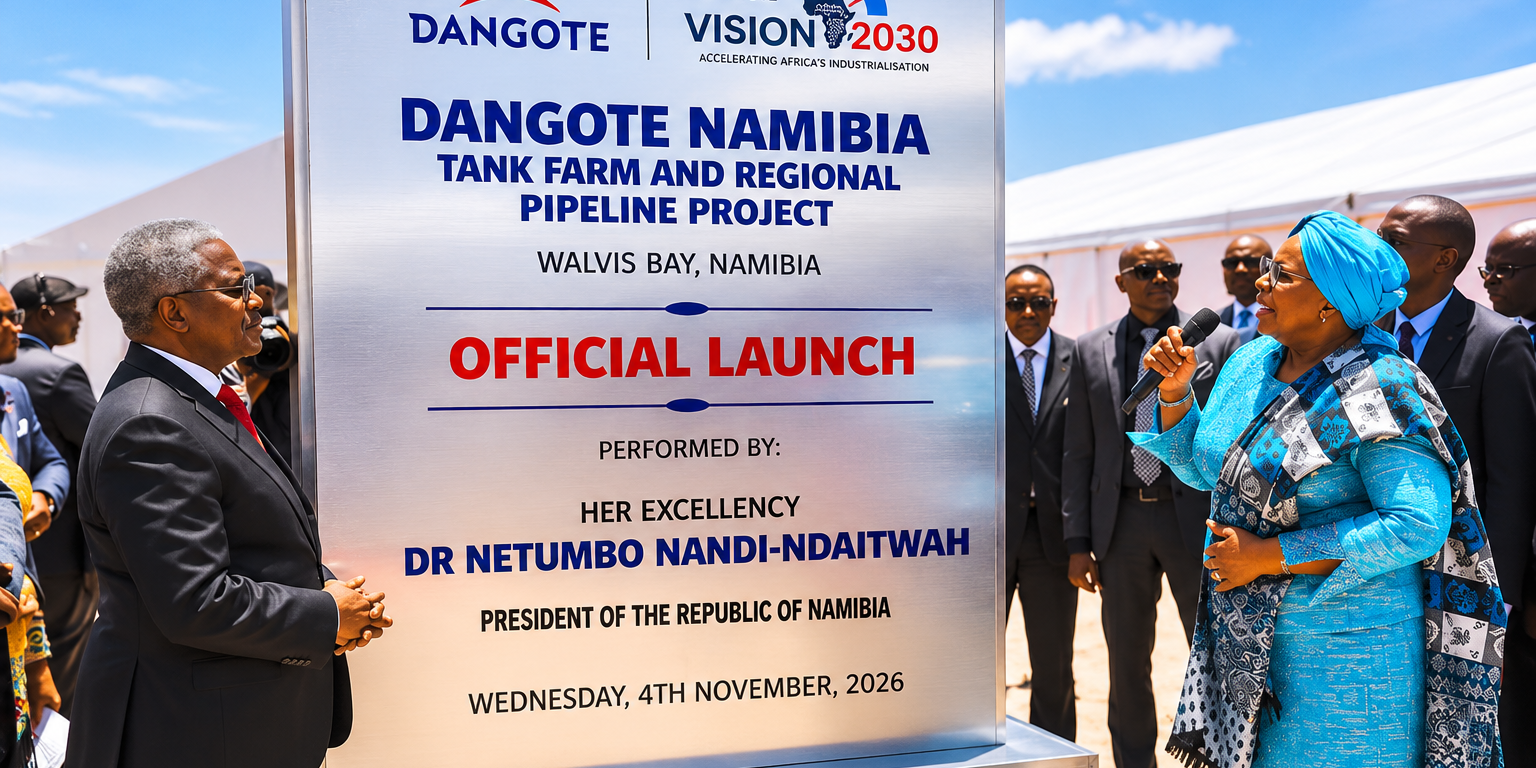
Dangote Group has launched a planned US$2.5 billion fuel storage and regional pipeline project in Namibia, with Zambia among the markets expected to benefit from an expanded petroleum distribution network.
The development, unveiled at Walvis Bay on 4 November, aims to strengthen fuel storage capacity and improve connections between the Atlantic port and inland Southern African markets.
For Zambia, the proposed network could provide an additional fuel supply option. However, the extent of those benefits will depend on the final infrastructure design, distribution arrangements and regulatory approvals.
The launch was attended by Namibian President Netumbo Nandi-Ndaitwah and Dangote Group President Aliko Dangote.
The proposed terminal will have storage capacity of approximately 600 million litres, comprising 360 million litres of diesel and 240 million litres of petrol.
It will also include truck-loading, dispensing and associated infrastructure to support onward distribution.
Located at Farm 58, approximately 10 kilometres east of Walvis Bay, the facility forms part of a wider plan to develop the port into a regional petroleum logistics hub.
Dangote said the distribution network was intended to serve markets including Botswana, Zambia, Zimbabwe, Malawi and the southern Democratic Republic of Congo.
The development also envisages a regional pipeline network of approximately 1,700 kilometres. Its final route and length remain subject to detailed engineering studies, route surveys and regulatory approvals.
Speaking at the launch, Dangote said the investment was intended to improve access to petroleum products and strengthen regional energy security.
He indicated an anticipated completion period of 18 to 20 months. However, the project’s implementation remains subject to outstanding approval processes.
On 9 November, The Namibian reported that the Walvis Bay terminal was still awaiting an environmental clearance certificate.
The project’s environmental consultant said public consultation had been completed and assessment reports were being prepared for regulatory review.
For Zambia’s mining, transport and industrial sectors, the project’s potential significance lies in greater supply flexibility and access to additional storage and distribution infrastructure.
Any reduction in delivered fuel costs would depend on transport charges, supply contracts and other commercial terms.
The launch therefore represents a proposed expansion of regional fuel infrastructure, with the practical benefits for Zambia still to be established.